Picture this: it’s a Friday evening, you’ve just finished a long week, and you’re finally hitting the highway for a weekend getaway. Twenty minutes in, a burning smell creeps into the cabin, and your dashboard lights up like a Christmas tree. You pull over, hands shaking a little, and realize you haven’t checked your engine oil in months. Sound familiar? Most of us have a story like this — or know someone who does. The good news is that almost every roadside horror story can be avoided with a bit of routine car maintenance.
This complete guide to car maintenance — what to check and when — walks you through everything you need to know about keeping your vehicle in top shape, completely free to read, bookmark, and come back to whenever you need a refresher. No confusing jargon, no scare tactics — just practical, plain-language advice you can actually use.
Car Maintenance Checklist: Why Routine Care Actually Matters
Let’s be honest — nobody wakes up excited to check their tire pressure. But think of your car the way you’d think of your own body. Skip your regular check-ups, ignore the warning signs, and eventually something’s going to break down at the worst possible time. Your car works the same way.
According to the Car Care Council, a nonprofit organization dedicated to consumer education on vehicle care, the majority of vehicles on the road are found to need at least one service or repair when inspected. That’s a staggering number, and it tells us something important: preventive maintenance isn’t optional if you want your car to last.
Here’s what consistent maintenance actually gets you:
- Improved safety — worn brake pads and bald tires are two of the leading contributors to preventable accidents.
- Better fuel economy — a poorly tuned engine or underinflated tires can quietly drain your wallet at the pump.
- Fewer expensive repairs — catching a small issue early is almost always cheaper than fixing the big problem it eventually causes.
- Higher resale value — a documented maintenance history is one of the first things buyers and dealers look for.
- Peace of mind — there’s something genuinely calming about knowing your car won’t leave you stranded.
With that in mind, let’s break down every major system you need to keep an eye on, one subtopic at a time.
1. Engine Oil and Oil Changes
Think of engine oil as the lifeblood of your car. It lubricates moving parts, reduces friction, and helps carry away heat. Without it, your engine would grind itself into scrap metal within minutes.
What to check: Oil level and oil color (fresh oil is amber; old oil turns dark and gritty).
When to check it: Once a month, and always before a long road trip.
When to change it: Traditionally every 3,000 miles, though most modern vehicles with synthetic oil can go anywhere from 5,000 to 10,000 miles between changes. Always check your owner’s manual — manufacturer recommendations vary quite a bit, and using the correct viscosity grade matters more than people realize.
Quick anecdote: A mechanic once told me about a customer who bragged about never changing his oil because his car “still ran fine.” Three weeks later, that same engine seized up on the interstate — a repair bill north of $4,000. Moral of the story: just because a problem isn’t visible doesn’t mean it isn’t there.
Step-by-step: Checking your oil
- Park on level ground and let the engine cool for a few minutes.
- Pop the hood and locate the dipstick.
- Slide it out, wipe the tip clean with a cloth, and push it back in all the way.
- Pull it out again and check where the oil sits relative to the “min” and “max” marks.
- Top off if needed, using the oil grade listed in your manual.
2. Tire Care and Maintenance
Your tires are the only part of your car actually touching the road, so it’s worth giving them the attention they deserve.
What to check: Tire pressure, tread depth, and uneven wear patterns.
When to check it: Monthly, and before any long drive. Pressure especially changes with temperature swings, so it’s smart to check more often in the colder months.
According to the National Highway Traffic Safety Administration (NHTSA), underinflated tires are a major contributor to tire-related crashes, and they also reduce fuel efficiency. That’s two good reasons to keep a tire pressure gauge in your glovebox.
The penny test: Slide a penny into the tire’s tread groove with Lincoln’s head turned downward, facing the tire. If you can see all of his head, your tread is too worn and it’s time for new tires.
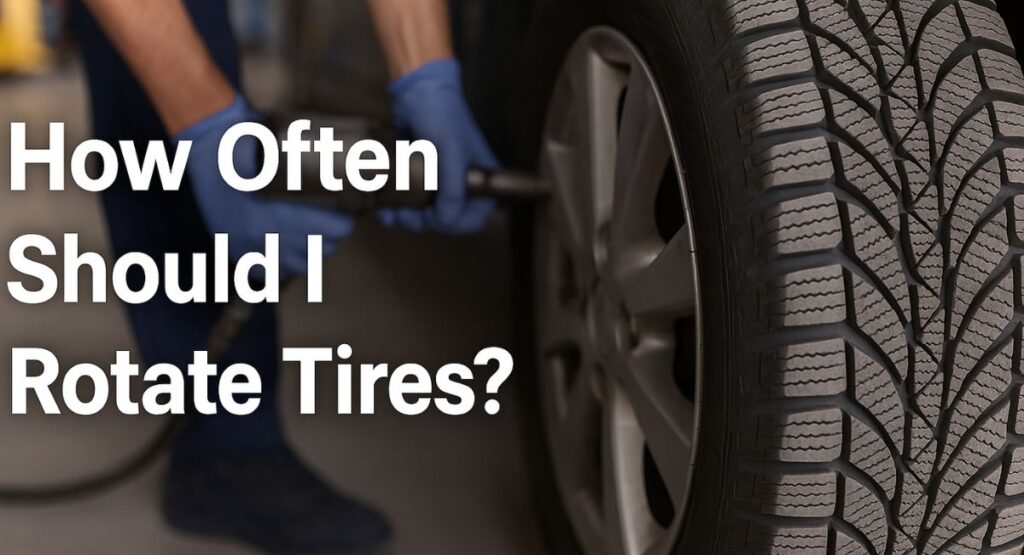
Rotation schedule: Most manufacturers recommend a tire rotation every 5,000 to 7,500 miles. This helps them wear evenly, which extends their lifespan and keeps your ride smoother.
3. Brake System Maintenance
There’s no part of your car more directly tied to your safety than your braking system. If you notice squealing, grinding, or a spongy pedal, don’t wait — get it checked immediately.
What to check: Brake pad thickness, rotor condition, and brake fluid level and color.
When to check it: Have your brakes inspected every 12,000 miles or once a year, whichever comes first. Consumer Reports notes that brake pads and rotors are typically replaced together, roughly every 25,000 to 50,000 miles, and recommends asking your shop for quality replacement parts, since poor-quality parts can affect braking performance.
Warning signs to watch for:
- Squealing or grinding noises when braking
- A pulling sensation to one side
- A pedal that feels soft or sinks to the floor
- Vibration when braking at highway speeds
Brake fluid should also be flushed roughly every two years, since it absorbs moisture over time, which can reduce braking performance.
Quick anecdote: A friend of mine ignored a faint squeal from her brakes for weeks, assuming it was “just the weather.” By the time she brought it in, the pads were completely worn down and the rotors had to be replaced too — a job that would’ve cost half as much if she’d caught it early.
4. Battery and Charging System
Nothing ruins a morning quite like turning the key and hearing… nothing. A dead battery is one of the most common (and most avoidable) roadside emergencies.
What to check: Battery terminals for corrosion, cable connections, and overall battery age. It’s also worth having the alternator and charging output tested periodically, since a failing alternator can drain even a brand-new battery.
When to check it: Every oil change is a good rule of thumb, and definitely before winter, since cold weather is brutal on batteries.
A typical car battery holds up for about three to five years. If yours is approaching that age, it’s worth having it load-tested at a shop rather than waiting for it to fail on a cold morning. Signs of a struggling charging system include dimming headlights, slow engine cranks, and a battery warning light on your dashboard.
5. Coolant and Overheating Prevention
Your engine generates an enormous amount of heat, and coolant (also called antifreeze) is what keeps it from cooking itself. This system is one of the most overlooked, yet one of the most important to keep on top of.
What to check: Coolant level in the reservoir, its color (it shouldn’t look rusty or milky), and the radiator cap seal.
When to check it: Every oil change, and a full coolant flush roughly every 30,000 to 60,000 miles (or up to 100,000 miles for some formulations), depending on the type of coolant your vehicle uses.
Warning signs of overheating:
- Temperature gauge creeping toward the red zone
- A sweet odor or visible steam drifting up from the engine bay
- Puddles of coolant under the car (often bright green, orange, or pink)
If you ever see steam rising from under the hood, pull over immediately, turn off the engine, and let it cool before checking anything — opening a hot radiator cap can cause serious burns.
6. Transmission Fluid and Service
The transmission is what transfers power from your engine to your wheels, and it relies on clean fluid to shift smoothly. Many drivers forget about this system entirely because it doesn’t need attention nearly as often as oil or tires — but when it fails, it’s one of the most expensive repairs you can face.
What to check: Transmission fluid level and color (it should be reddish and clear, not dark or burnt-smelling).
When to service it: Every 30,000 to 60,000 miles for most vehicles, though some modern “sealed” transmissions are rated for much longer — always check your owner’s manual.
Warning signs of trouble:
- Delayed or jerky gear shifts
- Slipping between gears
- A burning smell
- Puddles forming under the car (transmission fluid usually shows up red or brown)
Catching a transmission fluid issue early can mean a simple fluid change; ignoring it can mean a multi-thousand-dollar rebuild.
7. Air Filters and Replacement
There are two air filters in most vehicles, and both are easy to forget about.
Engine air filter: Keeps dust and debris out of your engine. A clogged one can reduce fuel efficiency and horsepower.
Cabin air filter: Filters the air you actually breathe inside the car. A dirty one can cause musty smells and reduced airflow from your vents.
When to check/replace: Every 12,000 to 15,000 miles, or sooner if you drive in dusty or high-pollen conditions.
Step-by-step: Replacing a cabin air filter
- Locate the filter housing (often behind the glovebox).
- Open the housing and slide out the old filter.
- Take note of which way the airflow arrow on the old filter is pointing.
- Insert the new filter in the same orientation.
- Close the housing securely.
8. Belts and Hoses
These rubber components are easy to overlook because they’re tucked away under the hood, out of sight and out of mind — until one snaps.
What to check: Cracking, fraying, glazing, or a squealing noise when starting the engine or turning the steering wheel.
When to check it: During every oil change, and definitely every 60,000 to 100,000 miles for a full timing belt inspection, if your vehicle has one (many newer cars use timing chains, which last much longer and generally don’t follow a fixed replacement schedule).
Quick anecdote: A colleague once had his serpentine belt snap on a highway on-ramp. Within seconds, he lost power steering and his battery stopped charging. A five-minute inspection at his last oil change would have caught the visible cracking that caused it.
9. Visibility and Windshield Maintenance
Seeing clearly isn’t optional — it’s one of the most basic safety requirements for driving. This category covers your lights, wipers, and windshield.
What to check: Headlights, taillights, brake lights, turn signals, wiper blade condition, and windshield chips or cracks.
When to check it: Monthly for lights and wipers. Ask a friend or family member to help you check brake lights by standing behind the car while you press the pedal.
Wiper blades typically need replacing every 6 to 12 months, especially if you notice streaking or skipping during rain. Keep your windshield washer fluid topped off, especially before winter or long road trips.
If you notice a small chip in your windshield, get it repaired quickly — a small chip can spread into a large crack surprisingly fast, especially with temperature changes.
Car Maintenance Schedule by Mileage: A Full Car Service Checklist You Can Follow
To make this easier, here’s a step-by-step car maintenance checklist, organized by mileage and time interval, that pulls all these subtopics together:
Monthly car maintenance checklist:
- Check tire pressure and tread.
- Check oil level.
- Test all exterior lights.
- Check windshield washer fluid.
Every 3–6 months (roughly 3,000–7,500 miles):
- Rotate tires.
- Replace wiper blades if worn.
- Check battery terminals for corrosion.
- Inspect belts and hoses for visible wear.
Yearly car maintenance checklist (every 12 months or 12,000 miles):
- Get brakes inspected.
- Swap out the cabin and engine air filters if they’re due.
- Flush coolant if due.
- Check transmission fluid condition.
- Schedule a full inspection with a trusted mechanic.
Car Maintenance Checklist Template: Free Tools to Keep Handy
If you’d rather not rely on memory, turning this guide into a car maintenance checklist template takes just a few minutes. Here are two simple, low-effort ways to build one:
- PDF checklist: The Car Care Council offers a free, printable service interval schedule you can download and keep in your glovebox — a handy car maintenance checklist PDF that’s organized by vehicle system.
- Vehicle maintenance checklist in Excel or Sheets: Prefer something digital? Create a simple spreadsheet with columns for “Item,” “Last Checked,” “Mileage,” and “Next Due.” List each subtopic from this guide — oil, tires, brakes, battery, coolant, transmission, air filters, belts, and wipers — as its own row, then update it after every visit to the mechanic. It takes ten minutes to set up and turns this article into a living, yearly car maintenance checklist you’ll actually use.
Why It Pays to Invest in Quality Parts and Trusted Service
Here’s the honest truth: cutting corners on car maintenance almost always costs more in the long run. Cheap, low-quality oil, worn-out filters, or off-brand brake pads might save you a few dollars today, but they tend to wear out faster and can put unnecessary strain on other components.
When it’s time for parts or service, choosing trusted, well-reviewed products and shops — whether that’s OEM-recommended oil, certified brake pads, quality coolant, or a certified technician — is one of the smartest investments you can make in your vehicle’s longevity. A little research goes a long way: check reviews, ask for manufacturer certifications, and don’t be afraid to ask your mechanic why they recommend a particular part or fluid. Vehicles maintained with quality components consistently show fewer breakdowns and higher resale value, so it really is money well spent.
If you’re ever unsure where to start, resources like the Car Care Council’s Car Care Guide offer free, manufacturer-neutral service schedules you can compare against your owner’s manual.
Final Thoughts
At the end of the day, car maintenance isn’t about being obsessive — it’s about being proactive. A few minutes each month spent checking your oil, tires, brakes, and lights can save you thousands of dollars and, more importantly, keep you and your passengers safe. Think of it less as a chore and more as a habit, the same way you’d brush your teeth or get an annual physical.
So next time you’re heading out on a road trip, take ten minutes beforehand to run through this guide. Your future self — stranded-free and cruising smoothly down the highway — will thank you.
Frequently Asked Questions
For car maintenance, what is the 30-60-90 rule?
The 30-60-90 rule is a simple way to remember the bigger maintenance milestones that come up as your car accumulates mileage — specifically at 30,000, 60,000, and 90,000 miles. Instead of waiting for something to break, this rule encourages you to get ahead of wear and tear at each checkpoint.
At 30,000 miles, you’re typically looking at an engine air filter replacement, a brake system inspection, a battery test, and a tire rotation and alignment check.
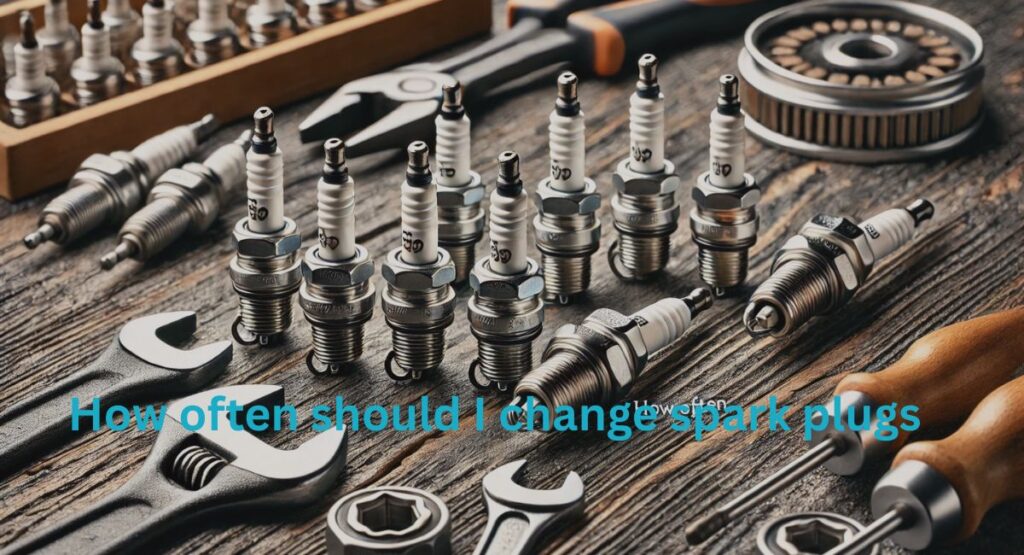
At 60,000 miles, things get more involved — this is usually when spark plugs get replaced, transmission fluid and coolant get flushed, and belts and hoses get a closer inspection.
At 90,000 miles, you’re often dealing with the big-ticket items: the timing belt (if your vehicle has one), the water pump, suspension components, and a full check of the fuel and exhaust systems.
Keep in mind this is a general guideline, not a one-size-fits-all rulebook. Your owner’s manual is always the final word, since your specific make and model — along with your driving habits and climate — can shift these intervals earlier or later.
What should I check for on my vehicle maintenance checklist?
A solid vehicle maintenance checklist should cover every system that keeps your car safe and running efficiently, not just the obvious stuff like gas and oil. At minimum, your checklist should include:
Engine oil level and condition
Tire pressure, tread depth, and rotation schedule
Brake pads, rotors, and brake fluid
Battery health and terminal corrosion
Coolant level and condition (to prevent overheating)
Transmission fluid level and color
Engine and cabin air filters
Belts and hoses for cracking or fraying
Lights, wipers, and windshield washer fluid
Going through this list monthly for the quick items (tires, oil, lights) and annually for the deeper checks (brakes, coolant, transmission) is a reliable way to catch small issues before they become expensive ones.
What are the 5 basic maintenance skills?
You don’t need to be a mechanic to keep your car healthy — a handful of basic skills will cover the majority of routine upkeep:
Checking and topping off engine oil using the dipstick.
Checking tire pressure and tread depth, including the penny test.
Inspecting fluid levels — coolant, brake fluid, transmission fluid, and windshield washer fluid.
Replacing air filters and wiper blades, both of which are simple, tool-free jobs on most vehicles.
Recognizing warning signs early — unusual noises, dashboard lights, smells, or vibrations — and knowing when it’s time to bring the car in rather than ignore it.
Mastering just these five skills puts you in a much stronger position to avoid surprise breakdowns, since most roadside emergencies trace back to one of these areas being neglected.
On my car, how do I know when to do maintenance?
Watch for these three dependable signals:
Mileage intervals. Most maintenance items — oil changes, tire rotations, brake inspections — are tied to specific mileage ranges (like the 30-60-90 rule above). Your owner’s manual lists these exact intervals for your vehicle.
Time intervals. Some components, like coolant, brake fluid, and batteries, degrade with age even if you’re not driving much, so time-based checks matter just as much as mileage.
Warning signs. Dashboard lights, unusual noises (squealing, grinding, ticking), vibrations, fluid leaks, or strange smells are your car’s way of telling you something needs attention now, not later.
A good habit is to combine all three: follow your manufacturer’s schedule as the baseline, but never ignore a warning sign just because you’re not “due” for service yet.
What is the most neglected car maintenance?
Tire maintenance is consistently one of the most overlooked areas, especially checking tire pressure and rotating tires on schedule. Many drivers only think about tires when tread is visibly bald or a tire goes flat, but underinflated or unevenly worn tires quietly reduce fuel efficiency and increase the risk of a blowout long before they look obviously worn.
Cabin air filters and coolant flushes are close runners-up — both are “out of sight, out of mind” items that don’t cause an immediate problem when skipped, which makes them easy to forget until they cause a bigger issue, like reduced cabin airflow or an overheating engine.
Without changing oil, can you go 2 years?
No — this isn’t recommended for any vehicle, even with today’s advanced synthetic oils. Most manufacturers recommend oil changes somewhere between every 5,000 and 10,000 miles, or roughly every 6 to 12 months, whichever comes first. Going two years without a change means your oil has likely broken down, lost its lubricating properties, and allowed sludge and contaminants to build up inside the engine.
Even if you barely drive, oil degrades over time due to condensation, temperature changes, and oxidation — not just from mileage. Running an engine on old, breaking-down oil dramatically increases the risk of internal engine damage, and in worst-case scenarios, complete engine failure. If it’s been anywhere close to two years since your last oil change, it’s worth getting it checked and changed as soon as possible, regardless of how the car “feels” on the road.