A coworker of mine once got stranded on the side of a highway during a heat wave, waiting almost two hours for a tow truck, all because of a battery that had been showing early warning signs for weeks. She later found out her mechanic had actually mentioned it at her last oil change — “keep an eye on that battery” — and it simply slipped her mind. It wasn’t a dramatic failure. It was a small, preventable one that turned into a genuinely miserable afternoon.
That’s the whole idea behind vehicle preventative maintenance — sometimes called car preventative maintenance, auto preventative maintenance, or automotive preventative maintenance, depending on who you ask: catching and addressing the small stuff on a schedule, before it turns into the kind of problem that strands you on a highway shoulder. This guide walks through the ten most essential preventive tasks, why each one matters, and exactly how often to do it — organized specifically around what breakdown or failure each tip prevents, so you can see the real payoff behind each habit. If you want to understand how preventive maintenance fits alongside the other types of vehicle maintenance — predictive, corrective, and scheduled — our companion guide, Define Vehicle Maintenance: Essential Guide for Reliable Car Care in 2026, covers that in more depth.
Is Vehicle Preventative Maintenance Really Worth It? Why It Works
Here’s a number worth sitting with: according to AAA’s analysis of roadside assistance data, millions of roadside breakdowns every year could have been prevented with basic, routine maintenance — yet a recurring AAA survey has found that roughly 35% of drivers admit to skipping or delaying recommended service. The most common culprits behind serious, tow-worthy breakdowns are strikingly consistent: battery and electrical issues account for around 23% of tows, cooling system failures around 11%, and tire damage around 10%. Nearly all of these categories are exactly what routine preventive maintenance is designed to catch early.
This is really the core argument for preventative maintenance as a mindset: it’s not about being paranoid or overly cautious. It’s about recognizing that the handful of minutes it takes to check a fluid level or listen for a warning sign is dramatically cheaper — in money, time, and stress — than dealing with the breakdown that follows when you don’t.
Vehicle Preventative Maintenance Checklist: Quick Reference Table
This preventative car maintenance checklist gives you the ten tips at a glance — bookmark it for a fast refresher any time.
| # | Preventive Task | What It Prevents | How Often |
|---|---|---|---|
| 1 | Engine oil changes | Engine seizure | Every 3,000–10,000 miles |
| 2 | Tire pressure & rotation | Blowouts, uneven wear | Monthly checks, rotate every 5,000–7,500 mi |
| 3 | Brake inspection | Brake failure | Every 12,000 miles / annually |
| 4 | Battery testing | No-start breakdowns | Annually after 3 years |
| 5 | Coolant checks/flush | Overheating | Every oil change; flush every 30,000–60,000 mi |
| 6 | Transmission fluid service | Transmission failure | Every 30,000–60,000 miles |
| 7 | Air filter replacement | Reduced performance | Every 12,000–15,000 miles |
| 8 | Belt & hose inspection | Sudden multi-system failure | Every oil change |
| 9 | Fluid leak checks | Escalating component damage | Ongoing, visual checks |
| 10 | Professional inspection | Hidden/undetectable issues | Annually |
The 10 Essential Preventive Maintenance Tips
1. Change Your Engine Oil on Schedule
What it prevents: Engine seizure and catastrophic internal engine damage.
Engine oil lubricates every moving part inside your engine. Without it — or with oil that’s broken down from age — metal parts grind against each other, generating heat and friction that can destroy an engine in a matter of minutes. Check your oil monthly, and change it according to your owner’s manual, typically every 3,000 to 10,000 miles depending on your oil type.
Anecdote: A mechanic once told me about a customer who drove for months after his oil light came on, assuming it was “probably nothing.” By the time he brought the car in, the engine had suffered irreversible damage — a repair bill that dwarfed years of routine oil changes combined.
2. Keep Tires Properly Inflated and Rotated
What it prevents: Blowouts, uneven wear, and reduced braking performance.
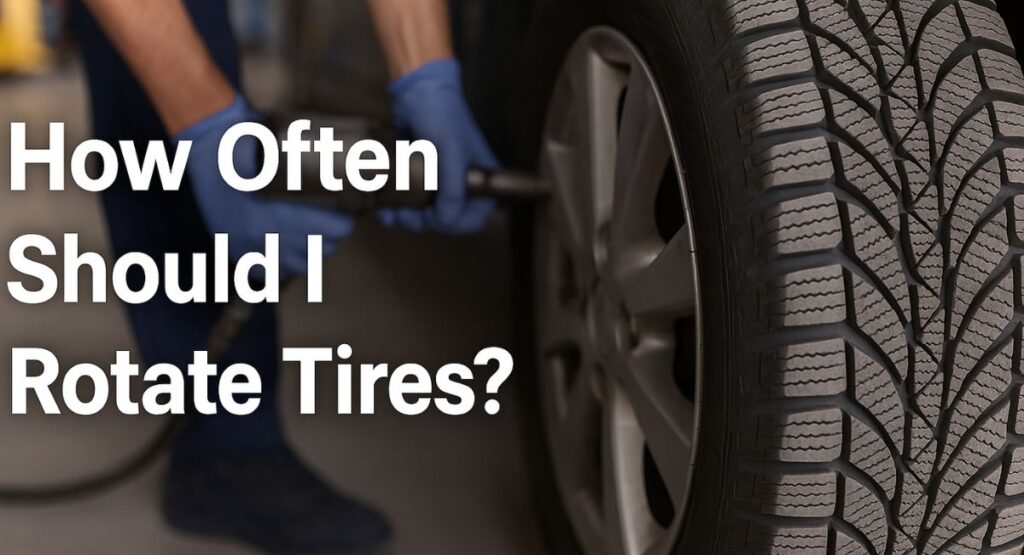
According to AAA’s own data, 60% of drivers don’t check their tire pressure regularly, despite it being one of the fastest, easiest checks you can do. Underinflated tires overheat more easily, wear unevenly, and are a leading contributor to blowouts. Check pressure monthly, and rotate tires every 5,000 to 7,500 miles to keep wear even across all four.
3. Have Your Brakes Inspected Regularly
What it prevents: Brake failure and dramatically increased stopping distances.
Worn brake pads don’t fail all at once — they thin gradually, which is exactly why a scheduled inspection matters more than waiting for an obvious symptom. Have your brakes checked every 12,000 miles or once a year, and address any squealing immediately, since it’s usually an intentional early-warning sound built into the pad itself.
4. Test Your Battery Before It Fails
What it prevents: No-start breakdowns, often at the worst possible moment.
Batteries typically last three to five years, and AAA recommends testing yours annually once it hits the three-year mark — a free service at most auto parts stores. This single step is directly aimed at preventing the exact no-start breakdown scenario that stranded my coworker on that highway shoulder.
5. Check and Flush Your Coolant System
What it prevents: Engine overheating and warped engine components.
Coolant keeps your engine at a safe operating temperature, and a slow leak or degraded coolant is one of the more common causes of serious, tow-requiring breakdowns. Check your coolant level with every oil change, and flush the system roughly every 30,000 to 60,000 miles depending on your vehicle.
6. Service Your Transmission Fluid
What it prevents: Transmission slipping, rough shifting, and eventual transmission failure.
Transmission fluid lubricates internal components and enables smooth gear shifts. Low or degraded fluid is one of the clearest examples in vehicle maintenance where a small, inexpensive fix now — a fluid change — prevents an enormous repair bill later, since transmission rebuilds are among the most expensive common repairs.
7. Replace Air Filters on Time
What it prevents: Reduced engine performance and unnecessarily strained engine components.
A clogged engine air filter forces your engine to work harder than it should, quietly reducing fuel efficiency and performance. It’s also one of the simplest, most affordable preventive tasks on this entire list — often a tool-free, five-minute job.
8. Inspect Belts and Hoses Before They Fail
What it prevents: Sudden loss of power steering, charging, or coolant circulation.
A serpentine belt or hose rarely gives much warning before it fails completely — a faint squeal or a small crack is often the only clue. Because a snapped belt can simultaneously knock out your power steering, battery charging, and engine cooling, checking for cracking or fraying at every oil change is a small habit that prevents a genuinely dangerous, multi-system failure.
9. Watch for Fluid Leaks Early
What it prevents: Escalating damage to whatever system the leak is draining.
A small fluid leak under your car is far easier — and cheaper — to diagnose and fix than the failure that follows if it’s ignored. Noting the fluid’s color (bright green or orange usually means coolant; dark and oily usually means engine oil; reddish usually means transmission or power steering fluid) gives your mechanic a genuine head start on diagnosis.
10. Schedule Professional Multi-Point Inspections
What it prevents: The issues you simply can’t see or hear yourself.
Even the most attentive driver can’t visually inspect a wheel bearing or pressure-test a cooling system. A periodic professional inspection — typically once a year, or at major mileage milestones — catches the issues hiding beneath the surface that none of the previous nine tips can fully cover on their own.
How to Build a Preventive Maintenance Routine: A Step-by-Step Approach
Knowing the ten tips is one thing; actually sticking to them is another. Here’s a simple system to make preventive maintenance a habit rather than an afterthought.
Step 1: Pull out your owner’s manual and list every scheduled interval. This is your baseline — the manufacturer’s own preventive maintenance schedule, built specifically for your engine and components.
Step 2: Set a recurring monthly reminder for the quick checks. Tire pressure, oil level, and a walk-around glance at your lights only take a few minutes but catch a surprising number of issues early.
Step 3: Log every service history entry, no matter how small. A simple note with the date and mileage helps you (and any mechanic) spot patterns and stay ahead of upcoming intervals.
Step 4: Book your annual inspection before you think you need it. Waiting for a symptom defeats the purpose of “preventive.” Schedule it the same way you’d schedule an annual physical.
Step 5: Address small findings immediately, not “eventually.” A minor issue caught during a routine check is preventive maintenance working exactly as intended — don’t let it slide back into “reactive” territory by putting it off.
Vehicle Preventative Maintenance Cost: Is Prevention Really Cheaper?
It’s worth putting real numbers next to this idea. AAA-affiliated repair shops estimate that drivers who properly maintain their vehicles save an average of $100 per visit in avoided repair costs, and broader annual cost data puts routine maintenance at around $792 per year — a modest, predictable number compared to the unpredictable expense of a major reactive repair, like a full transmission rebuild or a towed vehicle after a roadside breakdown. The math consistently favors prevention, even before factoring in the time, stress, and safety risk that come with an unexpected failure.
Car Maintenance Checklist Template: PDF and Excel Options
If you’d rather track these tips somewhere more permanent than memory, a car maintenance checklist template takes just a few minutes to set up:
- Car maintenance checklist PDF: The Car Care Council’s free service guide offers a printable, manufacturer-neutral schedule organized by vehicle system — a genuinely useful glovebox reference.
- Vehicle maintenance checklist Excel: Prefer something digital? Set up a simple spreadsheet with columns for “Task,” “Last Done,” “Mileage,” and “Next Due,” and list each of the ten preventive tasks above as its own row. Update it after every check or service, and you’ve got a living car maintenance checklist by mileage you’ll actually use.
For the complete, system-by-system version of this checklist with exact mileage intervals, our pillar guide’s full car maintenance schedule by mileage covers every system in detail.
Common Mistakes That Undermine Preventive Maintenance
Even well-intentioned drivers can accidentally sabotage their own preventive routine. A few patterns worth watching for:
- Following mileage only, ignoring time. Oil and coolant degrade with age even if the car sits mostly unused — a low-mileage car still needs service on a calendar, not just an odometer.
- Stopping at the “check” without acting on it. Checking your tire pressure means nothing if you don’t actually add air when it’s low. The check is only half the habit.
- Assuming a quiet car means a healthy car. Several of the most expensive failures — coolant leaks, thinning brake pads, degrading transmission fluid — produce no noticeable symptom until real damage has already occurred.
- Switching mechanics frequently with no continuity. A shop that’s serviced your car before is far more likely to notice a developing pattern than one seeing it for the first time.
- Treating preventive maintenance as optional once the warranty ends. If anything, an older, out-of-warranty vehicle benefits even more from consistent prevention, since there’s no manufacturer safety net left to catch a missed issue.
Avoiding these missteps is often just as important as the ten tips themselves — a great checklist followed inconsistently still leaves gaps for problems to slip through.
Why It Pays to Use Trusted Parts and a Reliable Mechanic
Every tip on this list works best when paired with quality components and a technician you trust. Cheap, off-brand parts — a bargain battery, a low-quality belt, an unfiltered oil — tend to wear out faster and can undercut the very prevention you’re trying to achieve. Choosing manufacturer-recommended parts, quality fluids, and a certified, well-reviewed mechanic gives you genuine confidence that your preventive maintenance is actually preventing something, not just going through the motions. Ask about part warranties, check reviews, and don’t hesitate to ask why a specific interval or part is being recommended for your vehicle — a trustworthy shop will always explain their reasoning clearly.
Final Thoughts
Vehicle preventative maintenance isn’t about perfection — it’s about consistency. None of these ten tips require mechanical expertise, and most take only a few minutes at a time. What they add up to, though, is a genuinely reliable car and a driver who isn’t caught off guard by a problem that was quietly announcing itself for weeks beforehand.
For the complete, system-by-system breakdown with exact mileage intervals, our Complete Guide to Car Maintenance: What to Check and When covers it in full detail. If you want to build your ideal service timing around your own driving habits, see How Often Should You Service Your Car? Essential Guide for 2026, and if something’s already gone wrong, our guide to Vehicle Maintenance Issues: 10 Common Problems and Simple Solutions will help you diagnose it. Between prevention and quick fixes, you’re well equipped to keep your car reliable for the long haul.
Frequently Asked Questions
What is considered preventative maintenance on a vehicle?
Preventative maintenance covers any task performed on a fixed schedule — by mileage, time, or both — specifically to prevent a problem before it happens, rather than reacting to something that’s already gone wrong. On a typical vehicle, this includes: regular engine oil and filter changes, tire rotations and pressure checks, brake inspections, battery testing, coolant checks and flushes, transmission fluid service, air filter replacements, belt and hose inspections, and scheduled professional multi-point inspections. The defining feature is timing — these tasks happen before a symptom appears, based on your manufacturer’s recommended intervals, not in response to a warning light or a strange noise. If a task is done only after something breaks or starts malfunctioning, that’s corrective or reactive maintenance instead, not preventative.
What is the $3,000 rule for cars?
The most common version of this rule is a rough decision-making guideline for repair-versus-replace decisions: if a single repair, or your total annual repair costs, exceed roughly $3,000, it’s generally considered a signal to seriously consider replacing the vehicle rather than continuing to repair it — especially on an older car with high mileage. Some versions of the rule compare that $3,000 figure specifically against the car’s current market value (if the repair costs more than the car is worth, replacement usually makes more financial sense), while other versions treat it as an annual repair-spending threshold once a vehicle passes a certain age or mileage (commonly cited around 150,000 miles or 8+ years old). It’s worth noting that this is a rule of thumb, not a hard financial law — a well-maintained, otherwise reliable car can sometimes still be worth repairing above that threshold, especially when compared honestly against the cost of financing and depreciation on a replacement vehicle. It’s also worth mentioning that “the $3,000 rule” sometimes refers to an unrelated concept — a suggested minimum budget or down payment when buying a used car — so context matters when you come across this phrase.
What are the 5 types of preventive maintenance?
While our companion article on vehicle maintenance types covers the four categories most relevant to everyday drivers, the broader maintenance field (used across manufacturing, aviation, and fleet management) commonly breaks preventive maintenance itself down into five recognized approaches:
Time-based preventive maintenance — performed on a fixed calendar schedule, regardless of usage (for example, a coolant flush every two years).
Usage-based (mileage-based) preventive maintenance — triggered by actual usage or mileage rather than the calendar (for example, an oil change every 5,000 miles).
Condition-based preventive maintenance — performed when a monitored condition reaches a defined threshold, such as replacing brake pads once wear sensors indicate they’ve thinned to a specific point.
Predictive preventive maintenance — uses real-time data or sensor monitoring to anticipate failure before it happens, such as a car’s oil-life monitoring system.
Prescriptive preventive maintenance — a more advanced approach (increasingly common in fleet and industrial settings) that uses data analysis not just to predict when something will fail, but to recommend the specific action needed to prevent it.
For everyday vehicle ownership, the first two — time-based and mileage-based — cover the vast majority of what you’ll actually schedule yourself, while condition-based and predictive approaches increasingly show up through built-in dashboard warning systems on newer vehicles.
Is preventative maintenance worth it?
Yes, and the numbers back this up clearly. According to AAA’s analysis of roadside assistance data, millions of breakdowns each year are preventable with basic maintenance, and AAA-affiliated repair shops estimate that drivers who stay on top of maintenance save an average of $100 per visit in avoided repair costs. Zoomed out further, routine annual maintenance costs average around $792 a year — a modest, predictable expense compared to the cost of a major reactive repair, like a transmission rebuild, or the inconvenience and expense of a roadside breakdown and tow. Beyond the financial case, preventative maintenance also protects your safety (worn brakes and tires are directly tied to accident risk), preserves your vehicle’s resale value, and reduces the frequency of the kind of surprise, inconvenient failures that disrupt your day. The upfront time cost is real but small; the downside of skipping it tends to be much larger.
What are the disadvantages of preventive maintenance?
While preventive maintenance is generally the right approach for most vehicle owners, it isn’t entirely without drawbacks:
Some cost is spent on parts that haven’t actually failed yet. Preventive maintenance occasionally replaces a component (like a belt or filter) slightly before it strictly needed it, since the schedule is based on typical wear patterns rather than that specific part’s actual condition.
It requires consistency and record-keeping. Preventive maintenance only works if it’s actually followed on schedule — an inconsistently maintained “preventive” routine loses much of its benefit.
It can create a false sense of security. Following a preventive schedule doesn’t guarantee nothing will ever go wrong; unexpected component failures can still happen between scheduled intervals, and it’s important not to ignore new symptoms just because “everything was serviced recently.”
Upfront time and scheduling burden. Regular appointments, monthly checks, and record-keeping require a degree of ongoing attention and time that purely reactive maintenance (fixing things only when they break) doesn’t demand upfront.
Generic schedules aren’t perfectly tailored to every driver. A standard preventive schedule is built around “normal” driving conditions and may need adjustment for drivers with unusually severe conditions (short trips, extreme climates, towing), meaning some manual judgment is still required rather than blindly following a generic interval.
Even accounting for these downsides, the overwhelming consensus among mechanics, AAA, and consumer advocacy groups is that preventive maintenance’s benefits — lower long-term costs, better safety, and fewer surprise breakdowns — outweigh these relatively minor drawbacks for the vast majority of drivers.