
My grandfather drove the same sedan for over 25 years, and to this day, people ask what his secret was. It wasn’t luck, and it wasn’t some expensive dealership package. It was a handful of small, consistent habits he never skipped, no matter how busy life got. When I finally asked him directly, he laughed and said, “I just listened to the car. It always tells you what it needs — most people just aren’t paying attention.”
That idea stuck with me, and it’s really the heart of this guide. You don’t need to be a mechanic to take great care of your car. You just need a set of simple, practical car maintenance tips you can build into your routine — the kind of everyday habits that quietly add years to your vehicle’s life. This guide covers the tips that matter most, organized so you can actually put them to use, not just read about them. For the full breakdown of exactly what to check and when, pair this guide with our Complete Guide to Car Maintenance: What to Check and When.
Fundamental Car Care: Why Small Habits Matter More Than Big Fixes
It’s tempting to think of car care as something that happens at the shop, in one big visit every few months. In reality, most of what keeps a car healthy happens in the small, everyday choices you make behind the wheel — how you start the engine, how you brake, how closely you pay attention to what the car is telling you. According to the Car Care Council, the majority of vehicles inspected are found to need at least one service or repair — a reminder that most maintenance problems are quietly building up long before anyone notices them.
With that in mind, let’s get into the tips themselves, grouped into a few practical categories.
Car Maintenance for Beginners: You Don’t Need to Be a Mechanic
If you’re newer to car ownership, it’s easy to feel like maintenance requires specialized knowledge you simply don’t have. It doesn’t. Car maintenance for beginners really comes down to two things: knowing what your car needs, and building the habit of actually checking on it. You don’t need to understand how an engine works internally to notice a squeal, glance at a tire, or read a dashboard light — and those small observations are what prevent most expensive repairs in the first place.
What Car Maintenance Can I Do Myself?
A common and completely reasonable question is what car maintenance can I do myself, versus what genuinely needs a professional. Here’s an honest breakdown:
Safe and simple to do yourself:
- Checking and topping off fluids (coolant, washer fluid, oil level)
- Checking and adjusting tire pressure
- Replacing wiper blades
- Replacing an engine air filter (tool-free on many vehicles)
- Checking and cleaning battery terminals
Better left to a professional:
- Brake system work
- Transmission service
- Timing belt or chain work
- Anything involving the car’s electrical or computer systems
Starting with the DIY-friendly list above is a great way to build confidence and get more familiar with your car, without taking on tasks that carry real risk if done incorrectly.
Basic Car Maintenance Tools Every Driver Should Own
A small, inexpensive toolkit makes most of the tips in this guide far easier to actually follow through on. A practical starter set includes:
- A tire pressure gauge (digital or analog)
- Jumper cables or a portable jump-starter pack
- A basic flashlight
- A simple tool kit (screwdrivers, pliers, an adjustable wrench)
- A tire tread depth gauge (or just a penny, for a quick check)
- Disposable gloves and a rag for anything involving fluids
None of this needs to be expensive — a solid starter kit typically costs less than a single mechanic visit, and it pays for itself the first time it saves you a roadside call.
1. Get to Know Your Owner’s Manual (Really)
This is the single most underused resource most drivers own. Your owner’s manual isn’t generic advice — it’s written specifically for your car’s engine, transmission, and components, and it tells you exactly which fluids, parts, and intervals your manufacturer recommends.
Quick tip: Keep a digital copy on your phone (most manufacturers post PDFs online) so you always have it, even if the paper copy is buried in your glovebox.
2. Learn to Actually Listen to Your Car
My grandfather’s advice holds up remarkably well here. Squeals, grinding, knocking, hissing, or a new smell aren’t random noise — they’re early warning signs, and catching them early is almost always cheaper than waiting.
Step-by-step: Building the habit
- Every time you start the car, take three seconds to notice anything unusual — a sound, a smell, a vibration.
- If something’s new, don’t dismiss it as “probably nothing.” Note when it happens (cold start? braking? turning?).
- Mention it at your next service, even if it seems minor — mechanics often catch bigger issues from small clues like this.
- If a sound is loud, sudden, or paired with a warning light, don’t wait for your next scheduled visit — get it checked promptly.
3. Don’t Ignore Dashboard Warning Lights
It’s easy to treat a small icon as background noise, especially if the car still seems to drive fine. But dashboard lights exist specifically because some problems don’t have obvious symptoms yet. According to the FTC’s guidance on auto repair, ignoring routine warning signs can lead to reduced fuel economy, reliability issues, or costly breakdowns down the road.
Quick tip: If a light is flashing rather than steady, treat it as urgent — that’s usually the car’s way of saying “pull over soon,” not “get to this eventually.”
4. Check Your Tires Monthly — Not Just When They Look Low
Tire pressure changes with temperature, not just wear, so a tire that looked fine in summer can quietly lose pressure once the weather turns cold. According to NHTSA, underinflated tires are a major contributor to tire-related crashes and also reduce fuel efficiency.
Quick tip: Check pressure when tires are cold (before driving), and keep a small tire gauge in your glovebox — it takes less than a minute per tire.
5. Stick to Your Oil Change Schedule — But Know Your Actual Interval
Engine oil is your engine’s lifeblood, and letting it go too long between changes is one of the most common (and most damaging) maintenance mistakes. That said, the “every 3,000 miles” rule is outdated for a lot of modern vehicles.
- Conventional oil: typically every 3,000–5,000 miles
- Synthetic oil: often good for 7,500–10,000 miles
Quick tip: Check your specific interval in your owner’s manual rather than assuming — using the wrong number in either direction either wastes money or risks engine wear.
6. Warm Up Gently — Don’t Idle to Warm the Engine
Many drivers still believe in letting a car idle for several minutes before driving, a habit left over from older carbureted engines. Modern fuel-injected engines actually warm up faster and more evenly by driving gently right away, rather than sitting still.
Quick tip: Start the engine, wait about 30 seconds, then drive off gently — avoiding hard acceleration for the first few minutes, especially in cold weather.
7. Drive Smoothly to Protect Brakes, Tires, and Fuel Economy
This might be the highest-impact tip on this entire list, and it costs nothing. Hard braking and aggressive acceleration wear down brake pads and tires significantly faster than smooth, anticipatory driving, and they also hurt fuel economy.
Anecdote: A rideshare driver I once talked to mentioned he replaces his brake pads almost twice as often as his brother, despite driving similar mileage — the difference, once they compared notes, was mostly driving style. His brother coasts to stops early; he tends to brake hard and late.
Quick tip: Leave a bit more following distance than feels necessary. It lets you brake gradually instead of suddenly, which is easier on nearly every major system in your car.
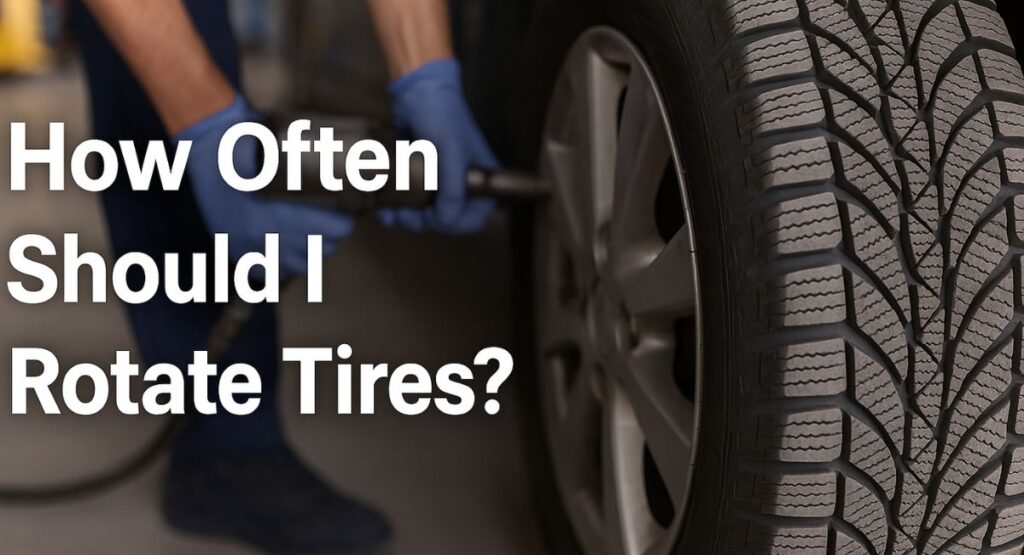
8. Rotate Your Tires on Schedule
Uneven tire wear isn’t just a tire problem — it can affect handling, fuel economy, and how evenly your brakes and suspension wear too. Most manufacturers recommend a tire rotation every 5,000 to 7,500 miles.
Quick tip: Pair your rotation with your oil change if your intervals are similar — many shops will do both in a single visit, saving you a trip.
9. Keep Your Car Clean — Inside, Outside, and Underneath
This tip surprises people, but it genuinely belongs on a maintenance list, not just a “looks nice” list. Road salt, mud, and grime left on the undercarriage can accelerate rust, especially in colder climates. Inside, spilled liquids and debris can damage upholstery and even interfere with electronics over time.
Quick tip: In winter climates, an occasional undercarriage rinse after heavy road-salt exposure genuinely helps prevent long-term rust damage.
10. Don’t Overload Your Vehicle
Every car has a maximum weight capacity, listed in your owner’s manual or on a sticker inside the driver’s door. Consistently overloading a vehicle — extra passengers, cargo, or towing beyond its rating — puts extra strain on the suspension, brakes, and tires, accelerating wear across multiple systems at once.
Quick tip: If you regularly carry heavy cargo, consider having your suspension and tires checked slightly more often than the standard interval.
11. Address Small Issues Immediately, Not “Eventually”
This is the tip that ties the whole guide together. A fluid leak (see our full breakdown of what fluid colors mean), a flickering light, a faint squeal — these are all cheap to fix today and expensive to ignore. For a full breakdown of exactly what these early warning signs mean and how to fix them, our companion guide, Vehicle Maintenance Issues: 10 Common Problems and Simple Solutions, walks through the ten most common ones in detail.
12. Keep a Simple Maintenance Log
You don’t need anything elaborate — a notes app, a spreadsheet, or even a notebook in the glovebox works fine. Logging your oil changes, tire rotations, and any repairs gives you (and any mechanic) a clear picture of your car’s history, which helps catch patterns and protects your warranty.
Quick tip: Snap a photo of every receipt and drop it in a dedicated phone album. It takes ten seconds and saves you from digging through paperwork later.
13. Prep Your Car for Each Season
Extreme heat and extreme cold both put unique strain on different systems. Before summer, check your coolant and A/C performance. Before winter, check your battery (cold weather is especially hard on batteries), tire tread, and wiper fluid concentration (winter-rated fluid won’t freeze in the reservoir).
Step-by-step: Quick seasonal check
- Test your battery before the season it’s most likely to fail in (typically right before winter).
- Check tire tread depth — winter and wet-weather traction depend heavily on it.
- Top off coolant and confirm the mixture is rated for your climate’s extremes.
- Swap wiper blades if they’re streaking, since visibility matters more in bad weather.
14. Choose a Consistent, Trusted Mechanic
Bouncing between different shops means no one has the full picture of your car’s history. A mechanic who’s serviced your car before can spot subtle changes and patterns a new shop might miss entirely.
Quick tip: Ask friends, family, or coworkers for recommendations, then stick with a shop once you find one that explains issues clearly and doesn’t push unnecessary work.
15. Keep a Basic Emergency Kit in Your Car
Good maintenance reduces breakdowns, but it doesn’t eliminate them entirely. A simple kit — jumper cables, a flashlight, a basic tool set, and a tire pressure gauge — turns a stressful roadside moment into a minor inconvenience.
Quick tip: Check your kit twice a year (an easy pairing with your seasonal prep) to replace expired items like flashlight batteries.
16. Use the Right Fuel for Your Engine
Using a lower octane than your manufacturer recommends can cause engine knocking and, over time, reduce performance and efficiency. Using a higher octane than needed, on the other hand, doesn’t hurt anything — it just doesn’t provide any real benefit, so it’s simply money spent without a payoff.
Quick tip: Your recommended octane is usually printed right on the fuel door or listed in your owner’s manual — a five-second check that saves you from guessing at the pump.
Why It Pays to Follow These Tips With Quality Parts and Trusted Service
Good habits are only half the equation — what you put into your car matters just as much as how consistently you maintain it. Cheap, off-brand oil, filters, or brake pads tend to wear out faster and can undercut even the best habits on this list. Choosing manufacturer-recommended parts, quality fluids, and a certified, well-reviewed shop gives you real confidence that your maintenance routine is actually protecting your investment, not just going through the motions. Ask about certifications, check reviews, and don’t hesitate to ask your mechanic why they’re recommending a specific product — a trustworthy shop will always explain their reasoning clearly, and that transparency is exactly what separates a shop worth returning to from one that isn’t.
Basic Car Maintenance Schedule: A Quick Reference
If you want a basic car maintenance schedule to pair with these habits, here’s the short version:
- Monthly: tire pressure, fluid levels, lights
- Every 3–6 months: tire rotation, wiper blades, battery terminals
- Every 5,000–10,000 miles (or per your manual): oil and filter change
- Annually: brake inspection, coolant check, full mechanic inspection
This is intentionally a high-level snapshot — for the complete, system-by-system car maintenance checklist with exact mileage intervals for every part of your vehicle, our Complete Guide to Car Maintenance: What to Check and When covers it in full detail.
Want to Go Deeper? Books, Courses, and Communities
If these tips leave you wanting more hands-on knowledge, a few paths are worth exploring:
- A basic car maintenance book — titles like Auto Repair for Dummies remain popular, beginner-friendly starting points that walk through fundamentals with clear diagrams.
- A basic car maintenance course — many community colleges offer affordable adult-education auto care classes, and platforms like YouTube host detailed, free walkthroughs for nearly every task on this list.
- Online communities — drivers frequently swap advice and troubleshoot together online; if you search for “car maintenance tips every driver should know reddit,” you’ll find active communities like r/MechanicAdvice where people share real-world experience alongside professional input. Just treat crowd-sourced advice as a starting point for research, not a replacement for a qualified mechanic’s diagnosis.
Even picking just one of these — a book, a class, or a habit of watching a tutorial before attempting a new task — builds real competence over time.
Final Thoughts
None of these tips require special tools, mechanical training, or a lot of extra time. What they require is consistency — the same quiet discipline my grandfather applied to his car for two and a half decades. You don’t need to master all sixteen at once, either; even picking up one random car maintenance tip from this list and turning it into a habit this month puts you ahead of where you were. Pay attention, act on small issues early, and treat maintenance as an ongoing habit rather than an occasional chore, and you’ll be well ahead of most drivers on the road.
If you’re ready to put these habits into a full system, our Complete Guide to Car Maintenance: What to Check and When covers the exact schedule to follow, our guide on How Often Should You Service Your Car? Essential Guide for 2026 helps you nail down your own ideal interval, and Define Vehicle Maintenance: Essential Guide for Reliable Car Care in 2026 is a great starting point if you’re still getting familiar with the basics. Between the habits in this guide and the systems in those, your car is in good hands — and so is your wallet.
Frequently Asked Questions
What is the 10 preventive maintenance?
While there’s no single official “top 10” list, ten of the most universally recommended preventive maintenance tasks for vehicles are:
Regular oil and filter changes
Tire rotation and pressure checks
Brake pad and rotor inspections
Battery and charging system checks
Coolant level checks and periodic flushes
Transmission fluid checks
Engine and cabin air filter replacements
Belt and hose inspections
Wiper blade replacement
Spark plug replacement
Together, these cover nearly every major system that wears down predictably through normal use, which is exactly why they show up on almost every manufacturer-recommended maintenance schedule in some form.
What is the 80/20 rule in maintenance?
The 80/20 rule in maintenance is an application of the broader Pareto Principle, which observes that roughly 80% of outcomes often come from just 20% of causes. In a maintenance context, this typically plays out as: about 80% of your maintenance costs or breakdowns tend to come from around 20% of your vehicle’s components — usually the systems that see the most wear, like brakes, tires, and the engine’s core wear items (oil, filters, belts). The practical takeaway is that focusing extra attention and budget on that critical 20% — rather than spreading equal effort across every minor component — tends to prevent the majority of costly failures. It’s less a strict mathematical rule and more a useful mental model: prioritize the few systems that cause most of the trouble, rather than treating every part of the car as equally urgent.
What are the six main types of maintenance?
Beyond the four most commonly discussed in everyday vehicle care, the broader maintenance field (used across industries like manufacturing and fleet management) generally recognizes six main types:
Preventive maintenance — scheduled work performed at fixed intervals to prevent failures before they occur.
Predictive maintenance — maintenance triggered by real-time monitoring or sensor data rather than a fixed schedule.
Corrective maintenance — repairs made after a problem has already occurred.
Condition-based maintenance — action taken based on the observed condition of a component, such as replacing brake pads once they visibly thin.
Scheduled/routine maintenance — maintenance performed according to a fixed, usage-based calendar, like manufacturer service intervals.
Emergency (reactive) maintenance — urgent, unplanned repairs needed to address a sudden failure with immediate safety or operational impact.
For everyday drivers, preventive and scheduled maintenance make up the bulk of what you’ll actually do, while the others become more relevant in fleet or industrial contexts.
What is included in a maintenance checklist?
A thorough vehicle maintenance checklist typically groups items by system, and includes both the task and the interval at which it’s due. A well-rounded checklist covers:
Engine: oil and filter changes, spark plugs, belts and hoses
Fluids: coolant, transmission fluid, power steering fluid, washer fluid
Tires: pressure, tread depth, rotation, alignment
Brakes: pad thickness, rotor condition, brake fluid
Electrical: battery health, terminals, alternator/charging system
Filters: engine air filter, cabin air filter
Visibility: wiper blades, headlights, taillights, turn signals
Documentation: date and mileage of each service, for warranty and resale purposes
The exact intervals for each of these items vary by vehicle, which is why cross-referencing a general checklist against your own owner’s manual is always the more reliable approach. Our Complete Guide to Car Maintenance: What to Check and When walks through a full checklist organized exactly this way.
What are four types of maintenance?
The four types most relevant to everyday vehicle maintenance are:
Preventive maintenance — proactive, scheduled tasks performed regardless of whether a problem seems present yet, like routine oil changes.
Predictive maintenance — maintenance guided by real-time data or condition monitoring, such as an oil-life indicator or tire-pressure sensor.
Corrective (reactive) maintenance — repairs performed after something has already failed, like replacing a part once it breaks.
Scheduled/routine maintenance — maintenance tied specifically to the manufacturer’s official service intervals, printed in your owner’s manual.
Most drivers naturally use a blend of all four: following the manufacturer’s schedule, reacting to sensor-based warnings, and occasionally dealing with an unplanned repair when something breaks unexpectedly.
What are five examples of preventive maintenance?
Five concrete, everyday examples of preventive maintenance on a vehicle include:
Changing the engine oil and filter before it breaks down and stops lubricating properly.
Rotating the tires every 5,000–7,500 miles to promote even wear before it becomes a handling or safety issue.
Replacing the cabin and engine air filters on schedule, before airflow and fuel efficiency noticeably suffer.
Flushing the coolant periodically, before it loses its ability to prevent overheating or corrosion.
Inspecting and replacing worn belts before they crack and snap, potentially taking the power steering or charging system down with them.
What ties all five together is timing — each one is done on a schedule, before failure, which is the defining feature that separates preventive maintenance from a repair.